Showing posts with label Food. Show all posts

Friday, 7 June 2013

One Lemon, Six Simultaneous Uses

On one balmy June night, Aye TaiTai had a brain wave about lemons. You know, lemons... those bright yellow fruits with really sour juice?

Use #1

  
Remove the peel from the lemon. Wait, wait, wait. Is it called the "peel", the "skin", the "rind" or the "something-carp"?
(From Blogspot)

Ok ok, so Aye TaiTai is not sure what the parts of a lemon are called. Since Google is her good friend, she found this:
 (From Cobalt Group)

Now that it is clearer, Aye TaiTai meant - "Remove the exocarp of the lemon. It's ok to include some mesocarp." Let's use "lemon peel" for short.

Put this into a pitcher of water (Must be at least 500ml, or it would be too sour!) and chill it in the fridge overnight. Makes one refreshing drink when you wake up in the morning!

What's Good About It?
  • Nutritious : Lemon peels contain about 5 to 10 times more vitamins than lemon juice. They are  an excellent source of fiber, potassium, magnesium, calcium, folate, and beta carotene. Containing high amounts of calcium and vitamin C, lemon peels have been shown to aid preventing osteoporosis, inflammatory polyarthritis, and rheumatoid arthritis.
  • Detox : Lemon peels contain citrus bioflavonoids which are very powerful at reducing your levels of oxidative stress . Lemon peels also aid in eradicating toxic elements in the body and removing carcinogenic elements.
  • Healthy Heart : Consumption of lemon peels helps in decreasing the cholesterol levels in the body, which in turn helps in promoting a better heart health. The potassium present in the peel actually helps in maintaining the blood pressure. The polyphenol flavonoids lowers the LDL cholesterol, which are the bad cholesterol.

   
Use #2

  
Wait. Don't throw away the lemon peels. Put these near places with household pests as they are a natural deterrent.

  (From Garden Harvest Supply)

  
Alternatively, leave the peels in the fridge or oven for a day to remove odours.


Use #3

  
Cut the peeled fruit into 4 slices. Squeeze a bit of juice from each quarter. This can be made into an instant and refreshing honey-lemon tea. Perfect for a hot day!


Use #4

  
What remains is the pulp of each quarter. These will be used for facials. Freeze the other 3 that are not needed now.

Take the remaining quarter and decide what you want to add to it:
  • Lemon pulp with salt : Exfoliation
  • Lemon pulp with egg yolk : Moisurizing
  • Lemon pulp with honey : Detoxification
(From Care2)
  

Use #5

  
After your facial, once again, no need throw away your pulp quarter.

Got any greasy pots and pans? Or any stains on your sink?
 (From Accentlabasp)

Just add salt to the lemon pulp and rub the lemon pulp onto these. Let them sit for a while before rinsing off. Cleans off the grease easily!


Use #6

  
If you have potted plants, you can add both the leftover peels and pulp to your plants - Works perfectly as a natural pest deterrent before becoming organic fertilizer.
 (From Real Simple)
    
So there. 6 simultaneous uses for a single lemon. What do you think of that sour yellow fruit now?

 (From Ruby Works)


Tuesday, 14 May 2013

Sleeping Beauty - Honey Lemon Face Mask

Aye TaiTai is vain. Yes, she admits it. So she constantly sources the internet lah, books lah, people's word of mouth lah, for recommendations on how to further "beautify" herself. (Errrm, not that she is a "beauty" herself lah, but chey, no harm looking better anytime, all the time right?)


One fine day, she spotted a recommendation on her friend's Facebook - the use of honey with a fresh lemon for a face mask. Nice... and not as messy as egg!


So she turned on her computer and sourced through this thing called the World Wide Web. Here's the gist of it:

  1. Squeeze 1/2 a lemon into a bowl.
     
  2. Add 2 tablespoons of honey.
    (Remember not to use a metal spoon with your honey!)
      
  3. Mix it with a spoon until the lemon juice is blended into the denser honey.
      
  4. Tie up your hair or use a hairband.
      
  5. Apply it all your face.
    (There are some versions which recommend avoid the eye area, but Aye TaiTai figured since this is more a moisturizing mask with no astringent effect, it's ok to use it around the eyes and mouth areas.)
      
  6. Leave on for 15-20 minutes, or till it dries.
      
  7. Apply another 1-2 layers after it dries for a better effect.
      
  8. Rinse it off with water or a mild facial foam.
       
  9. Continue this for 2-3 times per week for about a month for best results.
       
Feel the difference!


Alternative

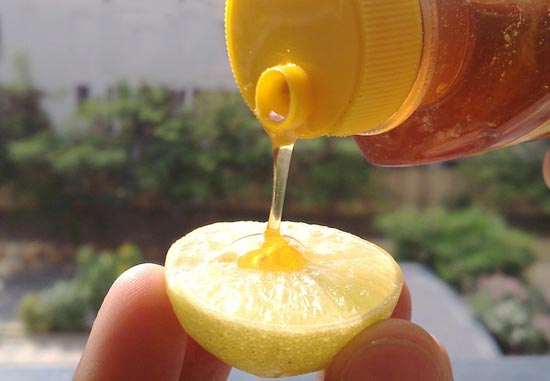
Aye TaiTai likes to use a cut lemon. She cuts a lemon into four pieces from pointed end to pointed end. A few drops of honey is added on to the lemon slice before she applies it to her face. The lemon slice acts as a sponge to absorb the honey. It also prevents the occurrence of sticky honey-stained fingers.


The Science Behind It All

Lemon brightens and exfoliates. It is a fruit rich in Vitamin C, which acts as an anti-oxidant to prevent wrinkles, sunburn and fights free radicals which can cause blemishes and acne. It is also a natural cleanser and an organic spot eraser. Continued use will lighten your face and clear up clogged pores.

On the other hand, honey is anti-bacterial and anti-inflammatory. It absorbs impurities from the pores and the skin, and has a slight moisturizing effect. So the end result is clear baby smooth skin!


Thursday, 9 May 2013

Adorable, Millionaire, and Loaded Ice Creams?

Daiso shop too much also sianz, so sometimes must alternate with some atas place. So today Aye TaiTai went to Marks & Spencer to kia lai kia keh (walk here walk there).

And and... Marks & Spencer has a new ice cream section!

Aye TaiTai's favourite adorable Percy Pigs comes in a "3 fruit flavoured ice cream lollies" version (S$6.90)!


And... who wants to be a Millionaire or be Loaded? Try out their Shortcake or Rocky Road flavours (S$13.50)! *Slurp!*


Color Life Cappuccino Maker - Professional Froth At S$2!

Aye TaiTai went shopping in Daiso, her favourite bargain curio store coz it's cheap and good! (Aih pih aih qih!) She found something very interesting!


The Color Life Cappuccino Maker comes in many bright colours - pink, green, blue. However, due to immense popularity, in many stores, the more "normal" colours are sold out, leaving only shocking pink stocks. *Yeeks!*
   

How It Works (The "Idiot-Proof" Aye TaiTai Version)

  1. Remove the wand-like apparatus from the packaging. 
    (Careful, don't get cut by the staples or the plastic cover!)
  2. Open the black battery cover at the bottom of the wand.
  3. Put in two AAA-sized batteries.
  4. Close the black battery cover at the bottom of the wand.
  5. Take an empty cup.
  6. Pour in 1/3 to 1/2 of milk into the cup.
  7. Put the wand into the milk. (Don't turn it on yet ok!) Immerse the wand fully into the milk (no need touch the bottom of the cup).
  8. Turn on the wand and Abracadabra -  You get froth!
  9. Churn a while more until the milk "rises" to fill 2/3 to 3/4 of the cup.
  10. Switch off the wand before removing it from the milk if you don't want to have spinning milk in your face.
Aye TaiTai's hard work resulted in this professional-looking cuppa:

Compare it to a real professional cuppa:

If you are a busy working professional or just someone who loves "local coffee" (Robusta beans fried with corn), you can use 2-in-1 or 3-in-1 packs, and lather the foamed milk on top. (2-in-1 preferred, as "non-dairy creamer" is just hydrogenated palm oil!) Heated or cold milk, it's your preference.

With the knowledge of how to make an espresso (which is just normal coffee and sugar to taste), and this new knowledge of how to make foamed milk, you can practically make lots of different types of coffee!


Oh yah, just for a comparison, professional froth-making machines like the ones below, retail at close to S$100:

Shiok boh?

In Town - Tokyo Sushi Academy

Aye TaiTai received news that a new Japanese culinary school has opened a branch in Singapore! 

According to their website, TSA is the only culinary school to learn how to prepare the Japanese traditional food, “Edomae Sushi”. Huh, simi?

The contemporary version, internationally known as "sushi", was created by Hanaya Yohei (1799–1858) at the end of the Edo period in Edo. Sushi invented by him was an early form of fast food that was not fermented nor refrigerated (therefore prepared quickly) and could be conveniently eaten with one's hands. Originally, this sushi was known as "Edomae Sushi" (江戸前寿司) because it used freshly caught fish in Edo (Edo Bay or Tokyo Bay). Though the fish used in modern sushi no longer usually comes from Tokyo Bay, it is still formally known as Edomae Nigiri Sushi. (From Wikipedia)

OK, Aye TaiTai understands now, so it's sushi made with very very very fresh ingredients. 

What's The Big Deal?

             
Once again, according to their website, TSA offers has a holistic curriculum to facilitate the understanding of Japanese cuisine. In addition to sushi-making classes, there are also cooking classes and other events to help bridge the cultural divide.

What Aye TaiTai especially likes is their range of short courses which goes beyond the kara-bento type of "art" to more beautifully-crafted and intricate patterns within the sushi roll. So cool to make when your friends drop by, right?


Tuesday, 7 May 2013

Cooking Pot - Steamed Clams In Sake

Aye TaiTai absolutely loves clams/mussels in a pot after trying the versions at Yomenya Gomon and Ambush (Plaza Singapura). So it was by chance that she found this recipe on WA Attention (reproduced in full below so that lazy bums don't have to click here click there). 

Ingredients are very simple:
  • 500g Clams  >>> Buy from NTUC
  • 1 Japanese white leek  >>> Buy from Meidi-Ya
  • 1 bunch of Mitsuba (Japanese parsley)  >>> Buy from your own downstairs market also can
  • 100ml Japanese Sake  >>> Buy from Meidi-Ya
Method is very straightforward:
  • Wash clams.
  • Cut vegetables.
  • Dump everything inside a pot and wait.
Something that Aye TaiTai, the Kitchen Sotong, can try out soon!


Steamed Clams in Sake


[Home Treats : Japanese Recipes for Your Daily Table]
Clam is a popular ingredient in Japanese home-cooking. This recipe is simple and easy, and yet is regarded as the favored way to enjoy the taste of fresh clams. You can also use other shellfish, like local lala, instead of clams.
Ingredients for 4 persons:
- 500g Clams
-1 Japanese white leek
- 1 bunch of Mitsuba (Japanese parsley)
- 100ml Japanese Sake
[Preparation]

1. Prepare the live clams by soaking them in thick salt water for 1 hour to draw out the sand inside, and then wash the shells.

2. Thinly slice the Japanese white leek. Pinch the leaves off the Mitsuba and chop the remaining stems to about 2-3cm long.
[Cooking]

1. Put the Japanese white leek into the bottom of the pot before putting in the clams, and then pour in the Sake.

2. Cook over a strong fire, covering the pot with a lid. As soon as the Sake is boiled, turn down the heat a little and
continue to cook until all the clam shells are open. It takes about 3 minutes.

3. Add in the Mitsuba stems and stir them in lightly before turning off the heat. Check the taste and add a pinch of salt if you like. 
Garnish with a scattering of Mitsuba leaves over the dish.

[Cooking Tips] 
Instead of Mitsuba, using Mizuna or young cabbage is also recommended.
**This recipe is published in Wattention Singapore, Vol. 10, Summer Issue, 2012.

In Town - Japan Food Fair At Isetan

Isetan Scotts
Central, Singapore
May 2013

Aye TaiTai visited Isetan Scotts today when she was in Orchard Road. The European Fair had just ended and the Japanese have arrived!

Tomorrow is the start of the Japan Food Fair and the vendors are already setting up this evening!

Aye TaiTai eagerly anticipates :
  • Fried seafood and tempura...

  • Hakata Yakitori all the way from Fukuoka in Kyushu...

  • Food served on a wooden boat...
    (Pssst, the nearby seaweed stall smells absolutely fragrant!)

The poster for tomorrow's Japan Food Fair...


Yumz yumz!